
If your Friday was more laid back than usual you can thank the Microsoft outage that took down Outloook and Teams for 30 hours.
So much of the world relies on Microsoft tools, Microsoft applications, Microsoft authentication, Microsoft storage and all the rest, and when it’s not available there’s simply no way customers can access their files and management tools and get things done. It has become a single point of failure for businesses and governments all around the world.
So, what went wrong? There are multiple cloud sites to connect to, your data is safely stored in multiple locations and I’m sure your corporate risk and resilience committees have carefully considered the implications of an outage. It’s unthinkable that you wouldn’t be able to communicate.
But that’s exactly what happened.
The good news is you could still talk to each other, yes even the Gen Z brigade.
You could still send and receive text messages and in a major weather event or a natural disaster, the National Emergency Management Agency would still be able to send you an emergency alert, even if they can’t email you about it.
The reason for that is our telecommunication networks and the multiple layers of redundancy built into the system. In New Zealand we have four different technologies at work to provide connectivity: fibre, mobile, fixed wireless and satellite. Each one plays a key part in our role as essential service, and each one overlaps with each other in terms of resilience, strengths and weaknesses.
Together, these different technologies give New Zealand a more resilient connectivity ecosystem, providing alternative ways of staying connected when individual technologies or services are disrupted.
Part of the reason for that is the constant investment in telecommunications networks that takes places every year. New Zealand’s telcos spend around $1.3 billion a year in network upgrades and improvements to ensure we stay viable and available for consumers throughout the country.
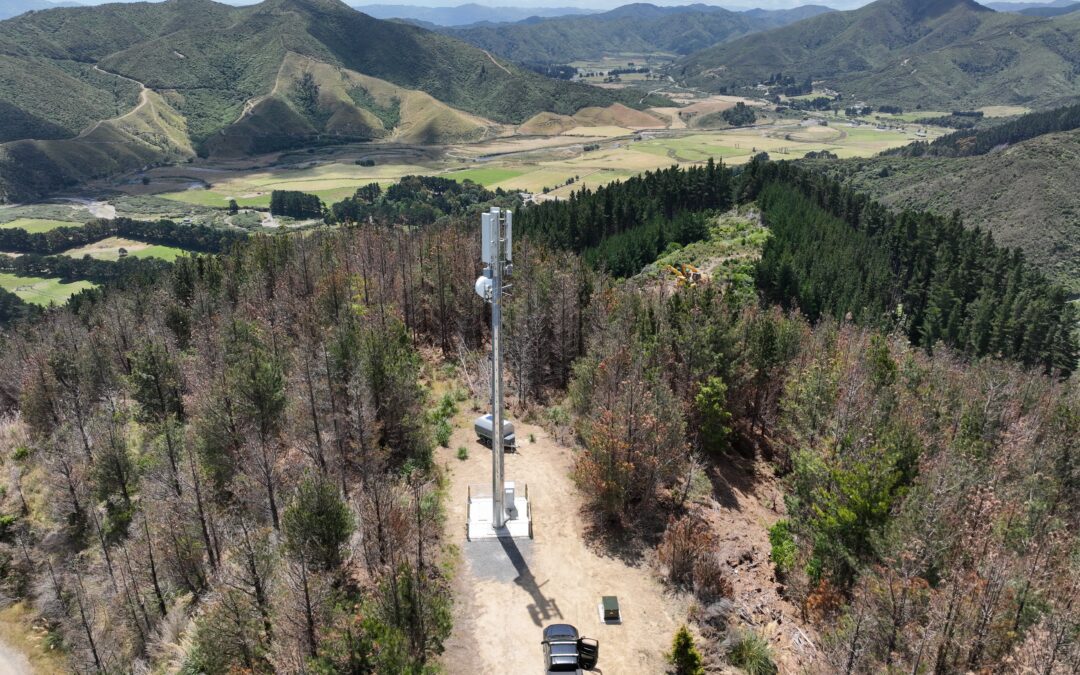
New Zealand’s mobile networks need substantial ongoing investment to keep up with customer demand. Over the next decade we expect to build around 3000 or so new cell sites that will involve a varied mix of infrastructure, including upgrades and sharing of existing sites, rooftop equipment, small cells and new mobile sites where they are needed. This includes commercial spaces like airports, shopping centres and stadiums that need in-building sites.
Recently there’s been quite a bit of discussion about why we need more cellphone towers. The argument is that customers can make calls today so we don’t need any more infrastructure in the future, but that’s just not true.
In the next 30 years Auckland, for example, is expected to reach a population of around two million people. Today’s networks need to expand to cope with that. Many of those people are expected to live in our ever-intensifying existing suburbs, and we’re seeing single-storey houses pulled out and replaced with three-storey, and five-storey townhouses, so naturally the towers that need to see over the top of buildings need to be taller.
And while there are likely to be two million people, the number of devices connected to the mobile networks are likely to be substantially higher again. Not only do we connect smartphones, there are smart watches, tablets and cars and so much more that all use mobile networks to connect. We’re seeing a boom in terms of the types of devices and the amount of traffic they send and receive and all of that needs more network capacity.
Rather than waiting until there’s a hole in the network we try to build ahead of demand and that means more towers, more cabinets, more batteries, more equipment in more places. Becuse while an email outage on a Friday might be funny for some, having comms drop out entirely when you need it the most simply isn’t a laughing matter.
Brislen is the CEO of the Telecommunications Forum.