
New Zealand’s three mobile network operators have shut down their 3G networks after a year-long awareness campaign to let customers know what was going on.
The focus of the campaign was on letting customers know what was happening and what the impact would be on their connections. It went well. Customers engaged, asked questions, migrated to new devices where needed and upgraded older devices where they could. The feedback has been positive and the number of complaints about the shutdown has been minimal.
But recently there have been a flurry of comments made relating to 3G that seem a little odd, and I wanted to address some of the myths that have popped up about what switch off 3G has, and more importantly has not, produced.
The decision to shut down 3G is being made all around the world and is driven by two factors: customers want more speed and more security in their connections. Newer technologies – 4G and 5G – offer faster speeds, lower latency, lower power consumption and higher levels of security.
Each of the three telcos worked to build out 4G and 5G capability to replace the old 3G network prior to the switch off. Coverage across New Zealand has increased in the past decade, not decreased, and the decision to switch off 3G was only made once coverage levels met or passed previous levels.
That doesn’t mean the new network footprint is exactly the same as the old. Different frequencies and different technologies mean you’ll get different coverage patterns.
You might find you can’t get coverage standing at the end of a street where you used to have coverage, but equally you’ll find new places where coverage is available where it used to be absent.
That doesn’t mean coverage has been lost, it’s just changed.
Each telco is now working to maximise their 4G and 5G network footprints and will continue to fine tune their networks as more towers are added. Over the next decade we expect to add around 1500 new towers to the nation’s fleet to increase capacity beyond today’s levels.
But mobile networks cover only about 60% of the geography of New Zealand. Ours is a country full of wrinkles and large uninhabited areas that we like to visit but not live in. Rural and remote parts of the country aren’t economic from a network deployment point of view, and telcos have worked with successive governments to deliver rural connectivity in remote locations all around Aotearoa.
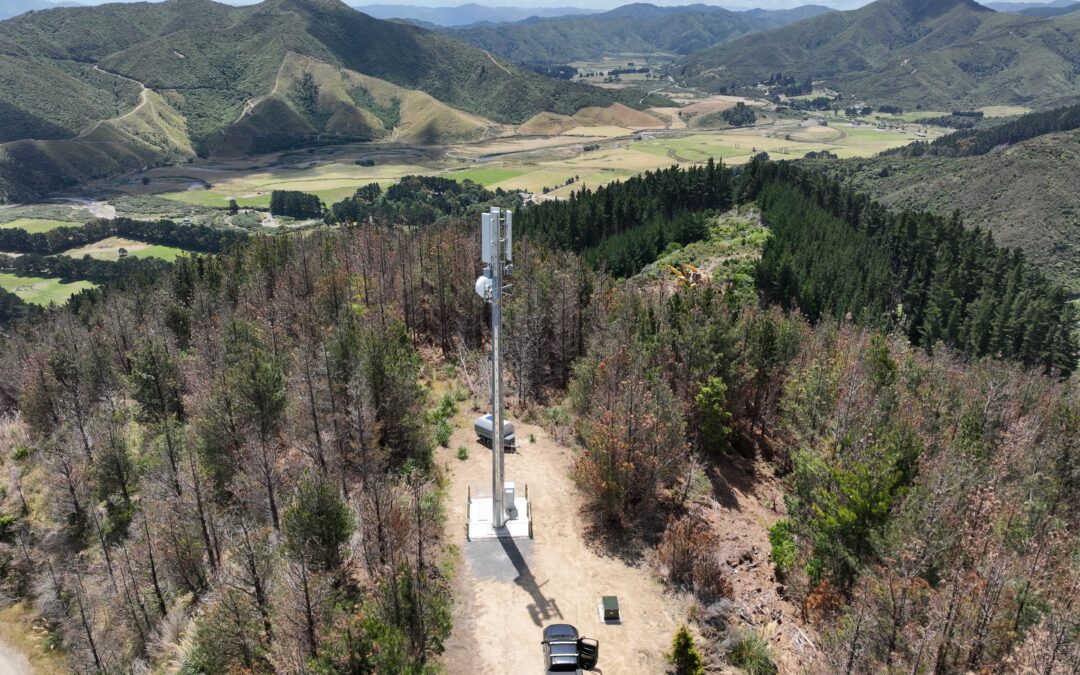
This public-private partnership has seen more than 500 cell towers built in the most remote parts of the country, providing much needed 4G coverage in places that aren’t economic for the telcos to build without support.
If you do have problems with your mobile service the first thing to do is contact your provider and talk to them. Networks are constantly fine tuned and if you’re having problems letting your telco know is the first step towards getting a resolution. And if your provider can’t offer a service, there are others who can. Shop around, you’ll be amazed at what’s available out there today in both mobile and fixed line.
On top of all that there is a new player in town as well. Technology has advanced hugely in the past two or three years with the arrival of low-earth orbit (LEO) satellites. LEO satellites offer the ability to cover those remote areas that are not economic to roll out terrestrial networks and provide coverage in places that have never had reception before.
As more satellites are sent into orbit we’ll see the current service – largely a fixed broadband product – expand into the mobile space, first with text messaging and later with data and even potentially voice calling. We’ll see the evolution of the customer device from a satellite dish and router into a mobile phone that will connect via 4G, 5G, wifi, Bluetooth and also LEO satellite.
All this is already happening and we’re seeing services come online today. All of it means rural connectivity is more advanced than ever before and rural customers can get online from all kinds of places around the country.