
If you thought things were getting expensive, you’re not alone. Costs have gone up enormously over the past few years or so, and yet we’re just supposed to absorb that price rise.
Milk, butter, vegetables, meat; they’ve all gone through the roof, but so too have rent, insurance, travel costs, clothes, and that’s before we get into the power bill, petrol or rates. No sector seems to be immune to it.
I thought it was just me getting old because it seemed to be far more than the handful of percentage points increasing, we’ve seen year after year. Somehow it feels like prices are dramatically higher, but I don’t remember seeing any data on this or much noise in the media beyond the odd item here and there.
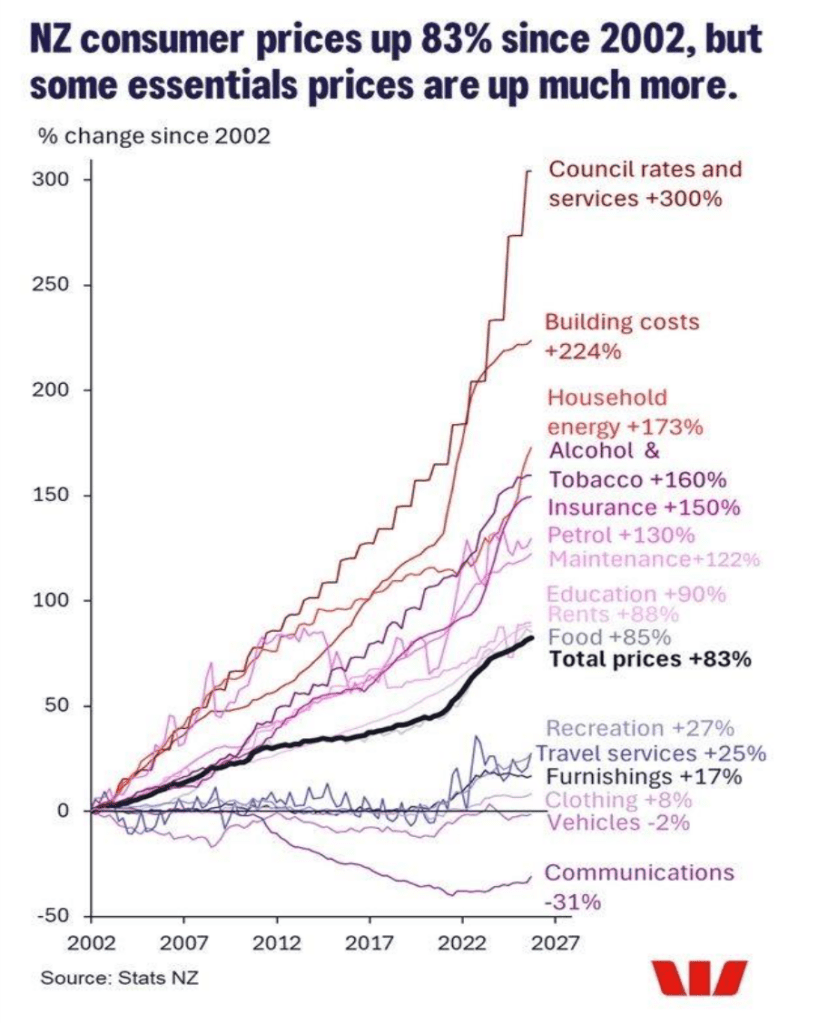
So, I was shocked to see a post from Westpac senior economist Satish Ranchhod over on LinkedIn where he outlined the price rise for multiple consumer items between 2002 and 2025. In that time, the consumer price index (CPI) reports a rise of 83% as an average figure.
Compound interest strikes again – it’s only 2.5% year on year but over the quarter century the price of your morning coffee has jumped from $3.50 to $6 without any real warning.
The real problem Satish identifies is that many of the areas with the largest price rises (food +85%, petrol +130%, insurance +150%, household energy +224%) are unavoidable essentials while the things that haven’t moved much (like travel, recreation and vehicles) are relatively speaking considered as luxury items.
There is only one area where costs have fallen dramatically over the past 25 years and that’s telecommunications. Our products and services have dropped in real terms by around 30%. The reason for that is simple – we might charge the same or slightly higher than we did in 2002, but we now offer vastly more data and calling standard, which makes the numbers look really good.
In 2002 I had a fixed wireless connection with 1Mbit/s download and a traffic cap of about 1GB a month. Today my plan is literally one thousand times faster and has unlimited data and a quick look at my usage shows I have chewed through 20GB of data just today: 726GB a month, yet my price is nearly the same as I paid back then.
Inflationary increases don’t appear to be done with us yet, so it’s important to remember that while the annual rate might be moderate, the cumulative impact is vastly more than we would like to see. Families must make tough choices about what essentials they can trim and what luxuries they can cull entirely. Every month I seem to spend a fortune on streaming services – a category that didn’t exist back when Satesh’s chart began.
As we consider our place in the broader scheme of things, it’s good to reflect once in a while on the things we’ve got right. Improving products and services while reducing overall cost is a huge win for consumers, and the Commerce Commission’s customer survey results demonstrate that customers are aware of that. I think if you were to ask most people what their pain points were, economically speaking, you’d hear about rents, mortgages, insurance, fuel, power and groceries. Telco, I suspect, wouldn’t make the top ten.